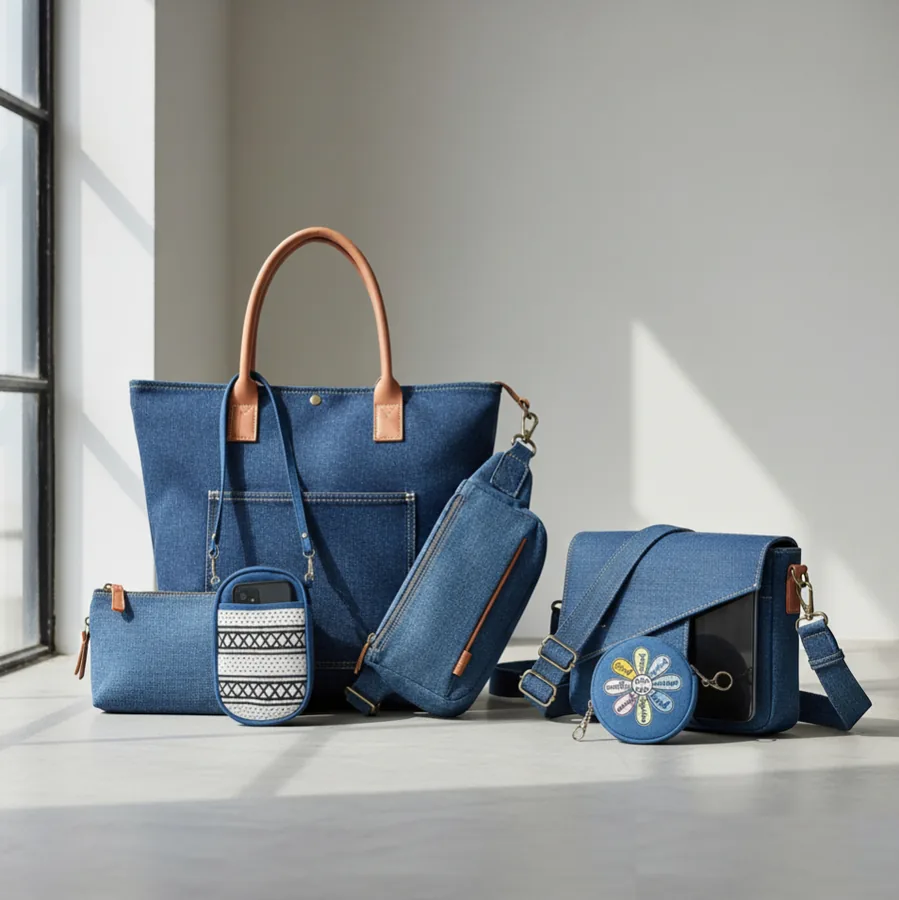
Denim accessories come in several distinct formats, and choosing the right one for your market depends less on the fabric (which is consistent across the range) and more on how the end customer will actually use it. This guide breaks down the main formats in our collection - pouches, slings, backpacks and totes - along with what each is best suited for.
Pouches
Compact and versatile, our pouch styles include Don't Worry Bee Happy Pouch, Easy Life Quote Sling Pouch, Follow Your Heart Inspirational Zipper Pouch, I'm a Vibe Slogan Pouch. Pouches are well suited to smaller retail price points and gifting ranges, since they require less material and are quick to personalize with a printed quote or embroidered design. They also work well as an add-on or impulse-purchase item alongside a larger product line.
Sling Bags
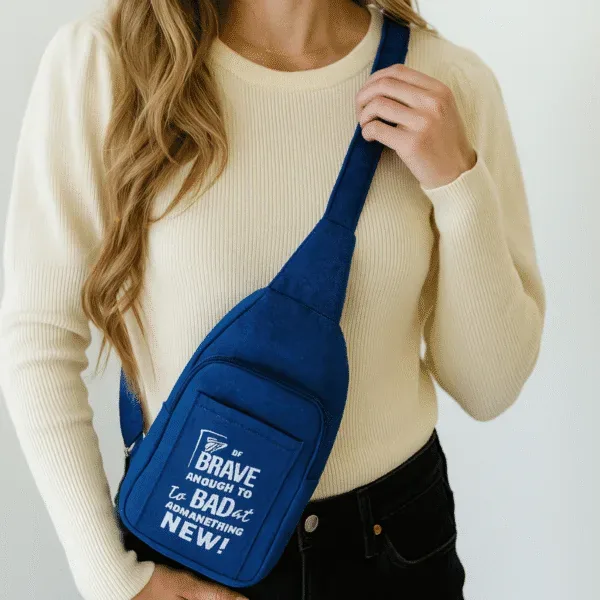
Sling and crossbody styles such as Brave Quote Printed Denim Sling Bag, Easy Life Quote Sling Pouch, Just Crazy Cartoon Sling, Take it Easy Sling are designed for everyday, hands-free carrying. This format has grown in popularity because it suits both casual and semi-formal use, and the crossbody strap format photographs well for e-commerce and social media listings, which matters if your buyers are selling primarily online.
Backpacks
Our backpack styles, including Bee Positive Drawstring Backpack, Navy Blue Embroidered Backpack, suit a more casual, daily-use segment - students, commuters and younger demographics in particular. Backpacks carry a higher perceived value than pouches or slings, which supports a higher retail price point for the same base material cost.
Totes and Carry Bags
Larger-format bags such as Good Things Take Time Bag, Brave Quote Printed Denim Sling Bag, Ethnic Pattern Mobile Crossbody Bag, Glam Girl Denim Bag work well for a daily-carry or lifestyle product line, and their larger surface area gives more room for a printed design or embroidery to stand out, which is useful for buyers building a branded or gifting-focused range.
How to Choose Between Formats
If you're building a gifting or impulse-purchase range, pouches offer the lowest cost per unit and the fastest turnaround on customization. If your buyers want an everyday-carry item with broader appeal, slings and totes tend to perform better across a wider age range. Backpacks suit a younger, more casual demographic and support a higher price point. Many buyers start with a mixed order across two or three formats to test which performs best in their market before committing to a larger single-format order.
Consistency Across the Range
Regardless of format, every item in the collection shares the same underlying material and construction quality: 100% premium denim, most with soft interior lining, with printed quotes, embroidery and pattern designs across the range and zippers, drawstrings or wrist/shoulder straps depending on style closures depending on the style. This means a buyer can mix formats in a single order without inconsistency in fabric quality across the range.
Design and Print Placement Considerations
The format you choose also affects how a design reads to the end customer. A quote or motto printed across a large tote panel reads very differently from the same text on a small pouch, where space constraints usually call for a shorter phrase or a smaller icon-style design. Buyers planning custom embroidery or printing should think about design scale alongside format choice, rather than treating the two decisions separately.
Retail Positioning by Format
Pouches and small sling bags typically sit at an accessible, gifting-friendly price point and work well near a checkout counter or as a bundled add-on. Totes and backpacks carry a higher perceived value and suit a standalone product listing or a lifestyle-focused retail display. Buyers building a full range often price and merchandise these formats differently even though they share the same base material and manufacturing quality.
Matching Format to Sales Channel
A format that performs well in one sales channel doesn't always translate to another. Pouches and small slings tend to do well in physical retail, where impulse purchases near a checkout counter are common, while totes and backpacks often perform better in online listings, where a larger product photographs more distinctly and can carry a more detailed lifestyle-focused description. Buyers selling primarily through one channel should weight their initial order toward the formats that suit that channel best, then expand into other formats once the primary channel is established.
Seasonal and Gifting Demand
Pouches and smaller accessories tend to see demand spikes around gifting seasons, since they work well as a standalone gift or a bundled add-on to a larger purchase. Totes and backpacks see more consistent, less seasonal demand as everyday-use items. Buyers planning inventory around a specific selling season should factor this difference into how they split an order across formats.
Frequently Asked Questions
Can I order a mix of pouches, slings and totes in one shipment?
Yes, mixed orders across formats are common, especially for buyers testing which style performs best in their market.
Do all styles support custom printing or embroidery?
Custom embroidery, printing and sizing can be discussed for bulk export orders across the range.
Which format has the best margin for a gifting range?
Pouches typically offer the lowest cost per unit, making them well suited to gifting and impulse-purchase price points.
Does design placement affect pricing?
Larger or more complex embroidery and print work can affect production time and cost - share your design with our team for an accurate quote.
Hardware and Closure Choices by Format
Beyond fabric and format, hardware choice (zippers, drawstrings, buckles) meaningfully affects both cost and perceived quality across the range. Zip closures give a more finished, secure feel and suit pouches and bags carrying valuables or electronics; drawstring closures are simpler, lower-cost, and suit casual or gifting-focused items where quick access matters more than security. Buyers building a range across multiple formats should decide early whether closure consistency (all zip, for example) or format-appropriate variation better serves their brand positioning.
Testing Formats Before a Full Range Commitment
Rather than committing to a full range across all four formats immediately, many buyers start with a smaller trial order spanning two or three formats they believe will perform best in their market, based on their existing customer base and sales channel. This limits upfront inventory risk while still providing real sales data to guide which formats deserve a larger follow-up order, rather than relying on assumptions about what will sell before any of it has actually reached customers.
Browse the Full Range
Every denim product we offer, with its own image and description, is listed on the Denim Products page.