If you've compared fastener specifications from different suppliers, you've likely seen references to DIN, ISO and ASTM standards. Each comes from a different standards body, and knowing the difference helps when matching a fastener to your own drawing or specification.
DIN (Deutsches Institut für Normung)
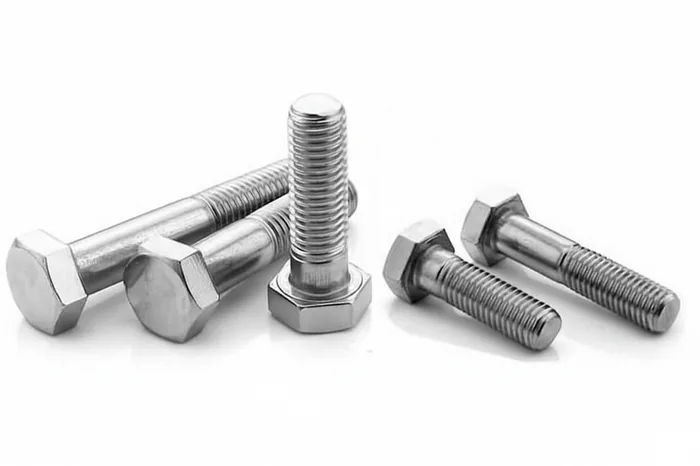
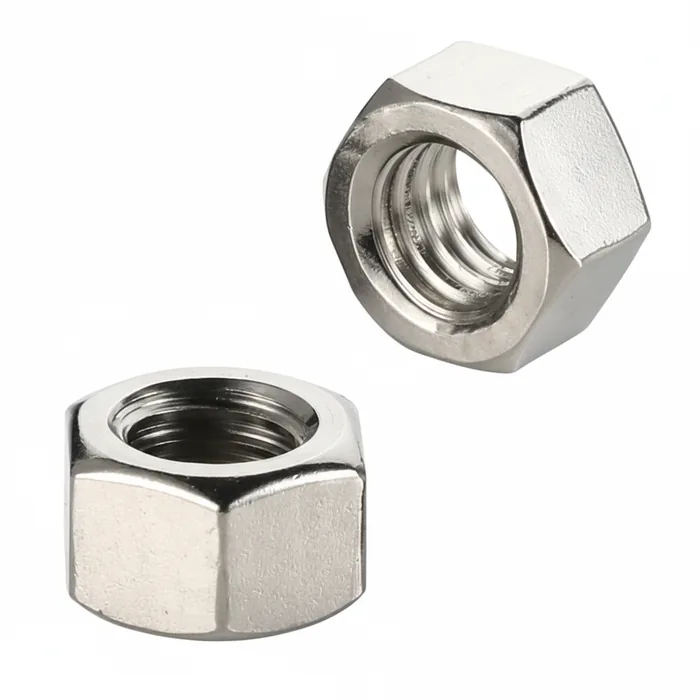
DIN standards originate from Germany and are widely used internationally as a reference for fastener dimensions - for example, DIN 933 for hex bolts or DIN 934 for hex nuts.
ISO (International Organization for Standardization)
ISO standards are designed for international consistency and often mirror or supersede equivalent DIN standards - for example, ISO 4017 corresponds closely to DIN 933 for hex bolts.
ASTM (American Society for Testing and Materials)
ASTM standards are more common in North American specifications and often define material and mechanical property requirements rather than just dimensions - for example, ASTM A307 and ASTM A325 for bolt grades.
Standards GRMB EXPORTERS manufactures to
Across our fastener range, we manufacture to DIN, ISO and ASTM specifications including ASME B18.15, ASME B18.16.3, ASME B18.2.1, ASME B18.2.2, ASME B18.3, ASME B18.5, ASTM A307, ASTM A325, ASTM F1554, DIN 125, DIN 1587, DIN 186, DIN 3570, DIN 444, DIN 478, DIN 529, DIN 580, DIN 582, DIN 603, DIN 7991, DIN 912, DIN 931, DIN 933, DIN 934, DIN 980, DIN 985, ISO 10642, ISO 1234, ISO 299, ISO 3266, ISO 4014, ISO 4017, ISO 4032, ISO 4762, ISO 582, ISO 7040, ISO 7089, ISO 7719, ISO 8677. Exact standards for each product are listed on its individual product page.
Why Standards Matter Beyond Just Dimensions
A fastener standard defines more than physical size. Depending on the standard family, it can also specify thread tolerance class, minimum mechanical properties (tensile and yield strength for a given grade), surface finish requirements, and testing methods used to verify compliance. This is why two fasteners that look identical and measure the same can behave very differently under load if they're manufactured to different standards or grades - the standard is really a proxy for a whole set of manufacturing and material commitments, not just a size reference.
How DIN, ISO and ASTM Relate to Each Other
Many DIN and ISO standards are closely related because ISO standards were often developed using DIN as a reference point during international harmonization efforts. This means a DIN 933 hex bolt and an ISO 4017 hex bolt are dimensionally very similar and often treated as interchangeable in practice, though a buyer with a strict specification should always confirm exact equivalence rather than assuming it. ASTM standards, being American in origin, are structured differently - they're often organized around material grade and mechanical property (like ASTM A325 for structural bolts) rather than purely around dimensions, which is why ASTM and DIN/ISO standards aren't always directly interchangeable even when a fastener's physical size matches.
Specifying a Standard Correctly in Your Purchase Order
When placing an order, buyers should specify the full standard designation, not just the standard family. "DIN 933" is specific; "DIN standard" is not, since DIN alone covers thousands of different component standards. Where a grade or class applies (such as Grade 8.8 or Class 10.9 for bolts), that should be specified alongside the standard number, since the standard defines the dimensional envelope while the grade defines the mechanical strength within it.
Certification vs Standard Compliance
Manufacturing to a standard and holding certification are related but distinct. Manufacturing to DIN 933, for example, means the fastener's dimensions and thread comply with that standard's specification. A certificate of conformity is a document confirming that compliance for a specific batch, typically accompanied by a mill test certificate showing the material's actual chemical composition and mechanical test results. Buyers with strict import or end-use requirements (structural, automotive, or safety-critical applications) should confirm which of these documents they actually need before placing an order, since not every application requires full batch-level certification.
Common Mistakes When Specifying Standards
- Specifying only a diameter and length without a standard number, leaving thread pitch and head dimensions ambiguous
- Assuming a DIN and equivalent ISO standard are always perfectly interchangeable without checking the specific standard pair
- Requesting a grade without confirming it's compatible with the standard specified (not every grade is available in every standard family)
- Not confirming whether a coarse or fine thread pitch is required, since the same nominal diameter can carry different thread pitches depending on the standard
Frequently Asked Questions
Can GRMB EXPORTERS supply fasteners to a standard not listed on the site?
Contact our export team with the specific standard and specification - depending on the product and standard, we can confirm whether we're able to manufacture to it.
What's the difference between a standard and a grade?
The standard (like DIN 933) defines dimensions and thread; the grade (like Grade 8.8) defines the material's mechanical strength. Both need to be specified together for a complete order.
Do I need a mill test certificate for every order?
Not necessarily - it depends on your application and your own import or end-use requirements. Confirm what documentation you need with our export team before production starts.
Are DIN and ISO standards the same thing?
They're closely related and often dimensionally similar, but not automatically identical. Always confirm exact equivalence for your specific standard pair rather than assuming interchangeability.
Reading a Grade Marking Correctly
Most bolts manufactured to recognized standards carry a grade marking stamped or embossed on the head, which lets a buyer or inspector verify the mechanical grade without needing separate documentation for every individual piece. Metric bolts typically show a two-number grade (like 8.8 or 10.9), where the first number relates to tensile strength and the second, when multiplied appropriately, relates to yield strength as a proportion of that tensile figure. Buyers receiving a shipment can use these markings as a first-line quality check against the ordered grade, alongside the accompanying certification for the batch.
When a Custom or Non-Standard Specification Makes Sense
Not every application is best served by a standard, off-the-shelf fastener specification. Custom projects, particularly in machinery design, specialized construction, or retrofit applications where an existing non-standard fastener needs to be replaced, sometimes require a non-standard size, thread, or head configuration. In these cases, buyers should provide a detailed drawing or an accurate sample of the required part, since verbal or approximate specifications for custom fasteners carry a much higher risk of miscommunication than ordering to a recognized standard number.