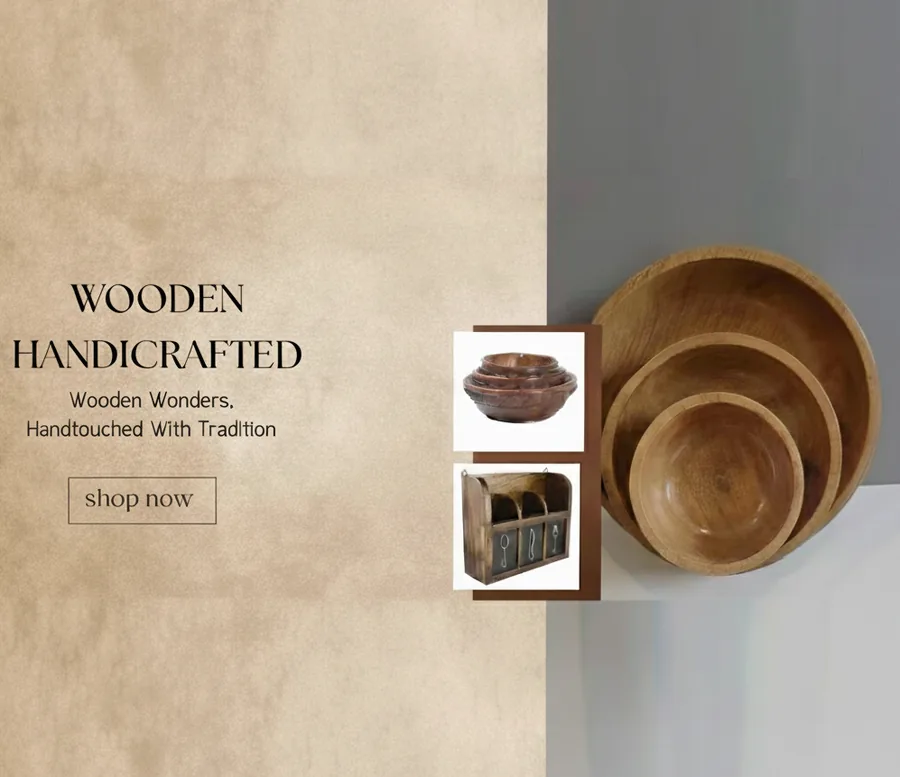
India has a long tradition of handmade décor and gift products, and handicrafts remain a category international buyers frequently ask about when building out a product line sourced from India.
Where GRMB EXPORTERS stands today
Handicrafts is an emerging division for us. Rather than presenting an incomplete catalog, we handle handicraft inquiries directly: as a merchant exporter already sourcing Denim and Leather/Vegan Leather from verified Indian producers, we can extend the same sourcing and quality-check process to handicraft categories on a buyer-inquiry basis.
How to start the conversation
If you're looking to source Indian handicrafts, share the product category, material, reference images and target quantity with our team, and we'll confirm whether we can source and quote it.
In the meantime
Our established Fasteners, Denim and Leather/Vegan Leather collections are ready for export today - see the full Product Collections page.
Why India Is a Major Source for Handicrafts
India has one of the world's largest and most diverse handicraft manufacturing bases, built on centuries of regional craft traditions that vary significantly by state and community - wood carving, metalwork, textiles, pottery, and stone craft each have distinct regional centers of expertise. This depth of skilled, often family-run production is a major reason international buyers continue to look to India for handmade décor and gift products, even as the category has grown more competitive globally. For a buyer, this also means sourcing decisions in this category are often as much about identifying the right regional producer for a specific craft as they are about price.
What This Category Commonly Includes
Handicrafts sourced from India typically span décor items (wall art, decorative boxes, candle holders), gifting products (personalized or festive items), textile-based crafts (block-printed or embroidered home textiles), and functional handmade goods (woven baskets, wooden trays, metalwork accessories). The specific mix a buyer sources usually depends on their retail channel and target market - gifting-focused buyers often prioritize smaller, lower-cost items, while home décor retailers look for larger, higher-value statement pieces.
What to Expect When Sourcing an Emerging Category
Because Handicrafts is a newer division for GRMB EXPORTERS rather than an established catalog like Fasteners, Denim or Leather/Vegan Leather, the sourcing process for this category is inquiry-led rather than catalog-led. A buyer shares the type of product, material, reference images and target quantity, and our team confirms whether we can source it through our existing producer network before quoting. This is a slower first step than ordering directly from a published catalog, but it also means buyers aren't limited to a fixed range and can request specific regional crafts or designs relevant to their market.
Working with a Multi-Category Exporter for Handicrafts
Buyers already sourcing Denim or Leather/Vegan Leather from GRMB EXPORTERS have a practical advantage when exploring Handicrafts: the same quality-check process, export documentation handling and single point of contact can extend to a handicraft inquiry, rather than requiring an entirely separate supplier relationship just to test a new category. This is particularly useful for buyers wanting to trial a small handicraft order alongside an existing shipment to reduce freight costs and supplier management overhead.
Realistic Timelines for This Category
Because handicraft production is frequently handmade or semi-handmade rather than machine-manufactured at scale, lead times can be longer and less predictable than for manufactured goods like fasteners, particularly for larger or highly detailed pieces. Buyers exploring this category for the first time should build in extra lead time for sourcing confirmation, sampling and production, and should treat a first handicraft order as an exploratory step rather than assume the same turnaround as an established product line.
Packaging Considerations for Fragile or Decorative Items
Many handicraft categories, particularly pottery, glasswork and detailed wood or metal pieces, require more careful export packaging than manufactured goods, since breakage or surface damage in transit can't be repaired the way a scuffed metal fastener sometimes can. Buyers should raise packaging and breakage-protection specifically as part of a handicraft inquiry, and confirm what happens in the case of transit damage, before assuming standard export packaging is sufficient for a fragile or decorative product line.
Questions to Ask Before Placing a Handicraft Inquiry
- What specific material, size and finish are you looking for, and do you have reference images?
- What is your target quantity, and is this a trial order or an ongoing requirement?
- What is your target price point, since handicraft production cost varies significantly by material and craft technique?
- What is your required delivery timeline, given that handmade production can take longer than manufactured goods?
Frequently Asked Questions
Does GRMB EXPORTERS have a fixed handicraft product catalog?
Not yet - Handicrafts is an emerging division sourced on a buyer-inquiry basis rather than from a fixed catalog. Share your requirement and our team will confirm what we can source.
Can I combine a handicraft order with an existing Denim or Leather order?
Yes, combining categories in a single shipment can be discussed with our export team to consolidate freight and simplify logistics.
How long does a handicraft inquiry typically take to quote?
It depends on the complexity of the product and whether it requires sourcing from a new producer - share full details (material, size, reference images, quantity) for the fastest response.
Is there a minimum order quantity for handicrafts?
MOQ depends on the specific product and producer sourced for your inquiry. Share your target quantity for an accurate answer.
Regional Craft Specialization Worth Knowing
India's handicraft production isn't centralized in one location - different regions are historically known for different techniques and materials, and understanding this can help a buyer describe what they're looking for more precisely. Wood carving and inlay work has strong traditions in several northern and western states, metalwork and brassware production is concentrated in specific historic manufacturing clusters, and block printing and textile crafts are associated with particular regional centers. A buyer who can reference the general craft type or region they're interested in, even loosely, helps our team identify the right producer faster than a general description alone.
Balancing Handmade Character with Consistency
One tension buyers should plan for in this category is the trade-off between handmade authenticity and batch-to-batch consistency. Genuinely handmade products carry natural variation from piece to piece, which is often exactly what gives them appeal and justifies a premium price point, but it also means a buyer expecting machine-level uniformity across a large order may be better served managing expectations upfront, or specifying acceptable variation ranges as part of the order agreement, rather than discovering a mismatch after goods arrive.