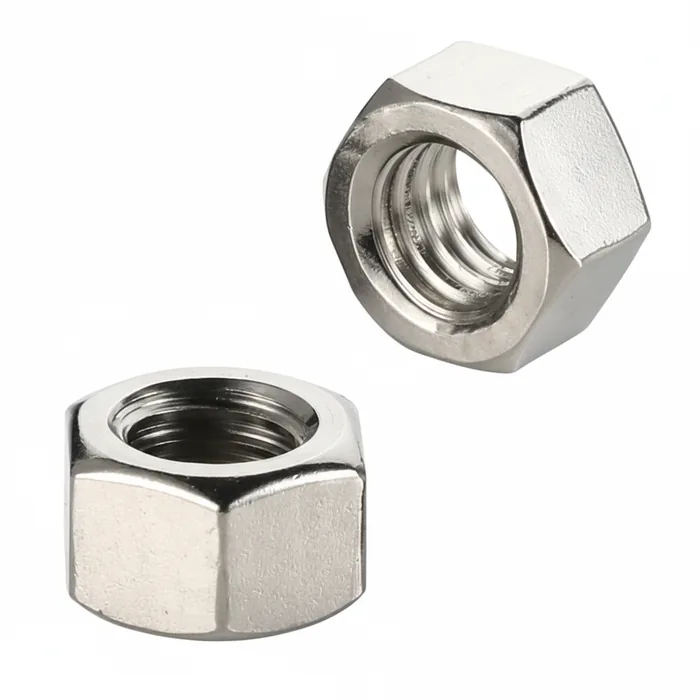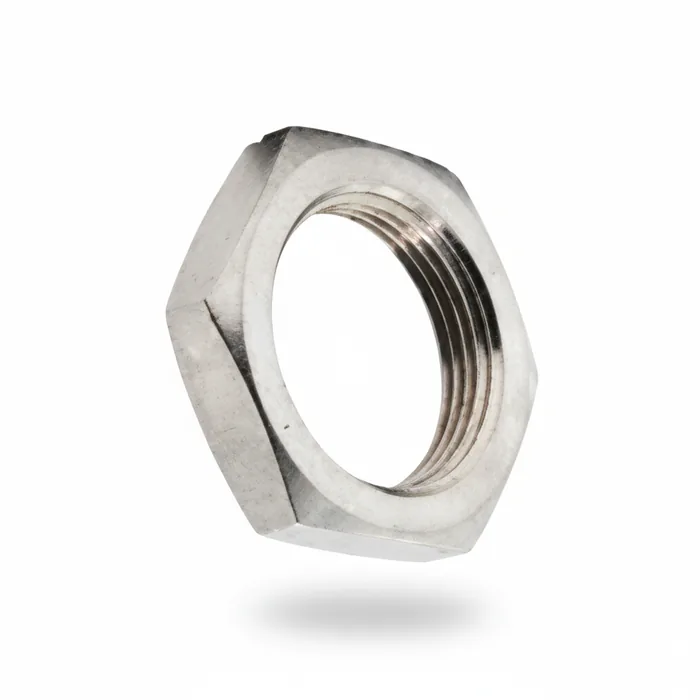
Our lock nuts are engineered with advanced locking mechanisms to prevent loosening in high-vibration environments. Available in all-metal designs, including deformed thread, distorted collar, and castle varieties, they cater to diverse industrial applications requiring reliable and secure fastening. GRMB EXPORTERS in India supplies these lock nuts with precise manufacturing, durable materials, and export-grade quality, making them a dependable choice for global machinery, automotive, and construction projects. Buyers sourcing this fastener for export or bulk industrial use typically want to know exactly what it is rated for, what standards it can be supplied to, and how to choose the right variant for their application. This guide covers all three.
What Are Lock Nuts?
Lock Nuts are the mating half of a bolted joint: threaded onto a bolt or stud, they convert rotational torque into the axial clamping force that holds an assembly together. The nut's thread class, material and locking mechanism matter as much as the bolt's, since a mismatched pair is a common cause of joint failure.
Where and How Lock Nuts Are Used
Lock Nuts are commonly specified for Heavy Machinery, Mining Equipment, Construction Equipment, Railroad Applications and Industrial Machinery. Across these applications, the fastener's primary job is the same: create and hold a secure, load-rated connection without loosening, corroding prematurely, or damaging the materials it joins.
Key Features
The features that matter most when sourcing lock nuts are the ones that determine fit and performance in your specific application, rather than anything cosmetic.
- Dimensional accuracy to the stated standard, so the part fits mating threads and tooling without rework
- Consistent material composition and hardness, so mechanical performance doesn't vary between production batches
- Finish applied evenly and to a controlled thickness, since an inconsistent coating is a common cause of premature corrosion
- Traceable raw material sourcing, which matters for buyers who need to document supply chain compliance
- Export-ready packaging that protects the finish and prevents damage in transit
GRMB EXPORTERS manufactures lock nuts directly, so dimensional consistency and quality control are handled in-house rather than through a trading intermediary.
Industries That Rely on Lock Nuts
The applications listed above span several distinct industries, each with its own reason for specifying lock nuts: Heavy Machinery, Mining Equipment, Construction Equipment, Railroad Applications and Industrial Machinery. Buyers in regulated or safety-critical industries in particular should confirm the exact standard and material certificate before placing a bulk order.
Materials and Specifications
Lock Nuts are available in M5 to M36. Common material choices include Carbon Steel, Stainless Steel (304, 316), Alloy Steel, each suited to a different balance of cost, strength and corrosion resistance. Available finishes are Zinc Plated, Plain.
Standards Explained
Lock Nuts can be supplied to DIN 980, ISO 7719, ASME B18.16.3. These standards define dimensional tolerances and, in some cases, minimum mechanical properties, which is what allows a buyer to specify a fastener by standard number and get a consistent, interchangeable part regardless of manufacturer. Manufacturing at GRMB EXPORTERS is certified to ISO 9001:2015.
What Buyers Should Consider
- The nut's thread class and pitch must match the bolt or stud it will run on - mixing metric and imperial threads, or coarse and fine pitches, is a frequent and entirely avoidable sourcing mistake.
- For applications with vibration or repeated load cycles (machinery, vehicles, structural connections), a self-locking type is usually worth the marginal cost difference over a standard nut.
- Material and finish should be specified together with the mating bolt, since a stainless nut on a carbon steel bolt (or vice versa) can accelerate galvanic corrosion in humid or outdoor conditions.
How to Choose the Right Lock Nuts
Match the nut's thread size and pitch to the bolt it will run on first, then decide on a locking mechanism based on whether the joint will see vibration or repeated loading. Material and finish should be chosen alongside the mating bolt to avoid galvanic corrosion between dissimilar metals.
Why Specification Accuracy Matters
An incorrect size, grade or finish is one of the most common (and most expensive) sourcing mistakes in industrial fasteners, since it is often only discovered during assembly or after installation. Confirming standard, size, material and finish in writing before an order is confirmed is the simplest way to avoid rework, delays or field failures.
Documentation and Export Compliance
For export orders, buyers typically request a mill test certificate confirming material composition and mechanical properties, a certificate of conformity to the stated standard, and a packing list matching the shipment. Confirming which of these your import process requires, before production starts, avoids delays at the documentation stage rather than at the port.
What to Check When a Shipment Arrives
On arrival, buyers should verify the shipment against the packing list and purchase order before goods are moved into general inventory: confirm quantity, check the grade marking on a sample of the lock nuts against the ordered grade, and inspect finish consistency across the batch. Any discrepancy is far easier to resolve while the shipment is still clearly documented and recent than after it has been mixed into existing stock or partially used in production.
Sourcing Lock Nuts from India
GRMB EXPORTERS manufactures Lock Nuts directly at our own facility in India, which means specification changes, quality checks and production scheduling are handled in-house rather than through a trading intermediary. Full specifications, including exact size range, material options and finishes, are listed on the Lock Nuts product page. Share your required size, material, standard and quantity and our export team will confirm pricing and lead time.
Frequently Asked Questions
What are Lock Nuts?
Our lock nuts are engineered with advanced locking mechanisms to prevent loosening in high-vibration environments. Available in all-metal designs, including deformed thread, distorted collar, and castle varieties, they cater to diverse industrial applications requiring reliable and secure fastening. GRMB EXPORTERS in India supplies these lock nuts with precise manufacturing, durable materials, and export-grade quality, making them a dependable choice for global machinery, automotive, and construction projects.
Where are Lock Nuts commonly used?
Lock Nuts are commonly used in Heavy Machinery, Mining Equipment, Construction Equipment, Railroad Applications and Industrial Machinery.
What materials are available for Lock Nuts?
We manufacture Lock Nuts in Carbon Steel, Stainless Steel (304, 316), Alloy Steel.
What sizes/specifications are available?
Lock Nuts are available in M5 to M36, with Zinc Plated, Plain finishes.
What standards can be supplied?
Lock Nuts can be supplied to DIN 980, ISO 7719, ASME B18.16.3, manufactured under ISO 9001:2015.
Can I request a quotation for a specific requirement?
Yes. Share the size, material, finish, standard and quantity you need via WhatsApp or the contact form, and our export team will quote accordingly.
Can customized requirements be discussed?
Yes, custom sizes, materials, finishes and packaging can be discussed for project-specific and bulk export requirements.
Conclusion
Lock Nuts are a straightforward but critical component once the right standard, material and finish are matched to the application. GRMB EXPORTERS supplies lock nuts manufactured to DIN 980, ISO 7719, ASME B18.16.3, ready for export with full documentation.